Boosting Young Minds: Engaging Cognitive Activities for Preschoolers
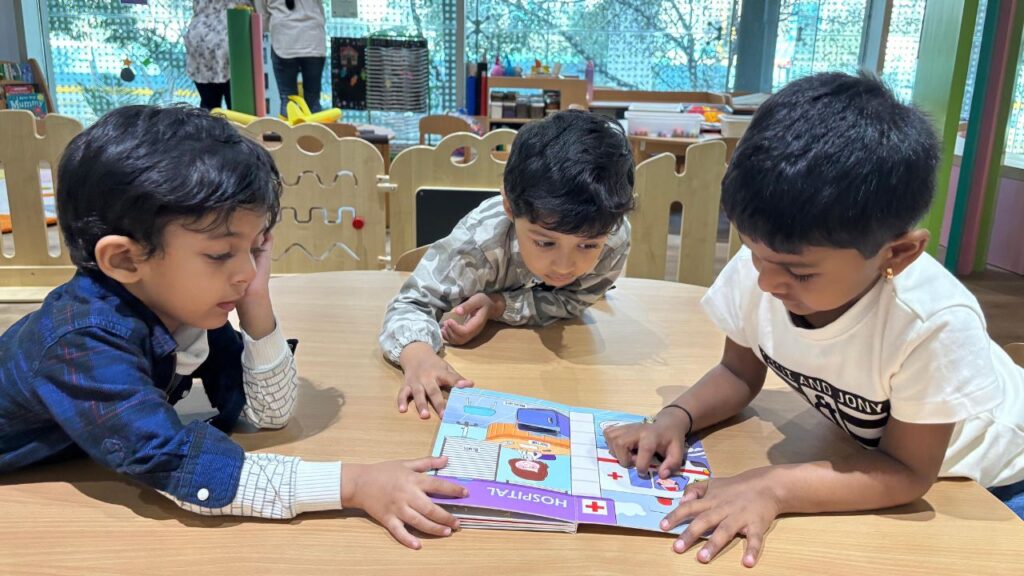
Early childhood is a time of rapid growth, big feelings, and endless curiosity. During these years, preschoolers build the brain skills they’ll use for life how to focus, remember, reason, communicate, and solve problems.
The best part? Cognitive development doesn’t need worksheets or “formal teaching.” When learning feels like play hands-on, interactive, and joyful preschoolers naturally strengthen the foundations for lifelong learning.
What is cognitive development and why Is It important?
- understand cause and effect
- build curiosity and try new strategies
- strengthen problem-solving skills
- express ideas using language
- make sense of social interactions and emotions
- build school readiness skills like listening, sequencing, and following routines
Core cognitive skills to foster in preschoolers
- Attention and Concentration: Staying with a task, listening, and filtering distractions.
- Memory Skills: Remembering instructions, routines, stories, and details.
- Problem-Solving Abilities: Figuring things out, trying again, adjusting strategies.
- Language and Communication: Naming, describing, asking questions, expressing ideas.
- Reasoning and Concept Formation: Understanding patterns, sequences, similarities, and differences.
- Creativity and Imagination: Thinking flexibly, inventing ideas, exploring possibilities.
15 Cognitive activities for preschoolers (fun + easy)
Here are playful cognitive development activities preschoolers genuinely enjoy—at home or in the classroom:
1. Memory Matching Games
Flip cards or objects to find pairs. Builds memory, focus, and recall.
2. Sorting and Categorizing
Group items by color, shape, size, or function. Strengthens logic and classification.
3. Simple Puzzles
Encourages problem-solving, patience, and spatial awareness.
4. Building Blocks
Planning, reasoning, and early “engineering thinking” through building and balance.
5. Pattern Recognition
Make or complete patterns using beads, stickers, colors, or objects—great for sequencing and early math.
6. Storytelling Sessions
Use picture cards or prompts to create stories. Builds language, memory, and imagination.
7. Role-Playing Games
Pretend play supports cognitive flexibility, social understanding, and creative problem-solving.
8. Number Games
Count toys, stairs, snacks, or claps. Builds early numeracy and quantity sense.
9. Shape Hunts
Find circles, squares, triangles around you. Builds observation and visual discrimination.
10. Simon Says
Strengthens listening, impulse control, working memory, and following instructions.
11. Obstacle Courses
Plan movements, solve “how to get through,” and build coordination.
12. Sorting Everyday Objects
Buttons, lids, socks, utensils—real-world sorting strengthens decision-making and attention.
13. Simple Science Experiments
Explore cause-and-effect (sink/float, magnets, mixing colors). Builds curiosity and reasoning.
14. Musical Games
Clap patterns, match rhythms, identify sounds—supports auditory processing, memory, and attention.
15. Art and Craft Activities
Drawing, painting, cutting, pasting—builds creativity, planning, and fine motor control.
Tip: Keep activities short (5–15 minutes). Preschoolers learn best in small, playful bursts.
More cognitive development activities for 3–5 year olds
- Memory Tray Game: Place a few objects on a tray, let preschoolers observe, then cover and recall what’s missing.
- Story Sequencing: Mix picture cards from a simple story and arrange them in order—builds sequencing and logical thinking.
- I Spy: Great for observation, attention, and descriptive language.
- Cooking or Baking Projects: Measure, count, follow steps—builds reasoning, early math, and working memory.
- Nature Walks with Observation Tasks: Spot patterns, compare leaves, count birds, notice changes—builds curiosity and classification.
Final thoughts
Cognitive development in the preschool years lays the foundation for how children learn, think, and solve problems throughout life. When you weave cognitive activities into everyday routines—through play, conversation, movement, stories, and hands-on exploration—preschoolers build memory, attention, reasoning, and language naturally.
When learning feels like play, preschoolers stay curious, confident, and eager to explore the world around them.
Faqs
What are the best cognitive activities for preschoolers?
Puzzles, memory games, sorting, storytelling, pretend play, and pattern activities are excellent for building thinking and problem-solving skills.
How do cognitive development activities help preschoolers?
They strengthen memory, attention, language, reasoning, and flexible thinking—supporting school readiness and lifelong learning.
How often should preschoolers do cognitive skills activities?
Daily—through short, playful sessions integrated into everyday routines (5–15 minutes at a time works well).